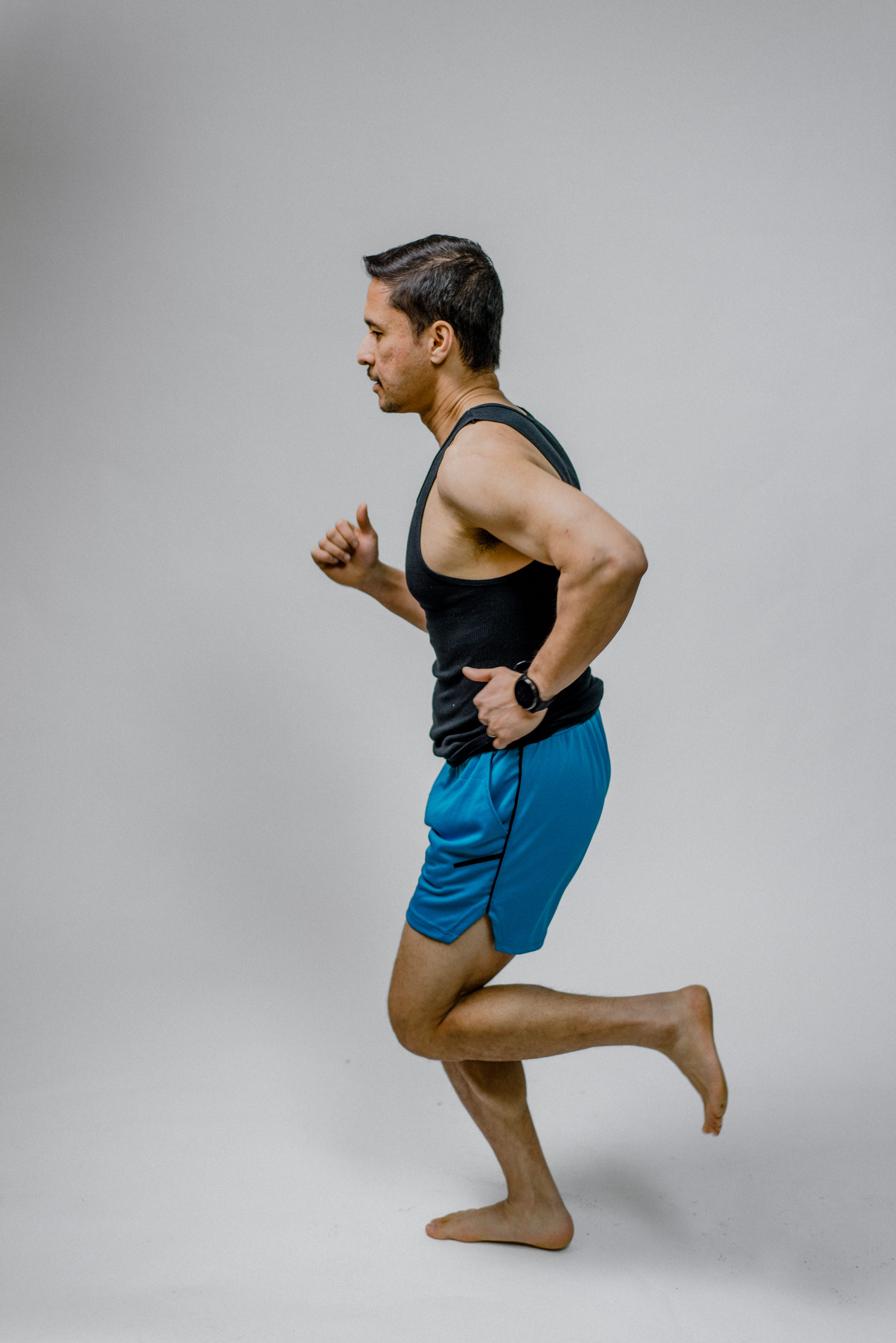
WHY I TRAIN BAREFOOT
In 1960, 28-year-old Ethiopian Abebe won the Olympic gold in marathon running barefoot. He not only won the gold but set a world record with a time of 2 hours and 15 minutes, a feat that today would put him in the elite company. Christopher McDougall in his bestseller book “Born to Run” writes about the runners from Tarahumara tribe of Northern Mexico who outran the trained ultramarathon runners with ease, simply using thin handmade sandals (huaraches). There could be countless other examples of people walking and running barefoot in the remotest part of the world. In Nepal, my native country, I have witnessed local villager walking barefoot up and down the foothills of the mountains carrying weight on their head. From the dusty fields of favelas in Brazil to many developing countries in Africa, we often hear stories or seen picture of kids playing football(soccer) barefoot.
In 2013, I celebrated my 30th birthday, my youthful years obviously far behind me. In the past decade or so, I had picked up share of ankle and leg injuries: ankle sprains, Achilles tendonitis, shin splints, plantar fasciitis, iliotibial (IT) band syndrome, and hamstring strain. I felt like a weakened warrior with injuries starting to prevent me from enjoying my daily living, running and sports that I love. To make matters worse, excess weight started to exacerbate my knees. According to runner’s world, nearly ½ of all recreational runners sustain injuries. Falling myself in those statistics, I wondered if improper running form, weak ankle/leg muscles and appropriate running shoes had much to do with my injury woes.
While there were lot of anecdotal evidence around barefoot running, apparently there seems to be very little evidence-based research on barefoot runners. I haphazardly stumbled into watching a Nature documentary that showcased Professor Dr. Daniel Lieberman, a barefoot runner. Dr Lieberman’s ground breaking research compared barefoot runners versus runners with shoes (shod runners). His research team compared impact shock generated while landing between barefoot vs shod runners. As the research found, barefoot runners tended to land on forefoot, generating less impact shock than runners who land on their heels. This research led me to test my own long-term hypothesis: will the transition to barefoot cure my injury woes?
While walking barefoot may not turn out to be a difficult transition, running was a different story altogether. While the acclimation process was quite steep, it took me three months before I began to jog comfortably. Since the last decade, I have been running barefoot or using minimalist shoes and managed to stay injury free with the exception of ‘toe turf’ playing soccer barefoot. Kids do not try this at home!
In the next article and videos, I would like to share some tips that had helped me to transition to natural running form without injuries. This obviously requires a multi-step approach:
- Implement proper running form.
- Strengthen ankle/leg muscles
- Flexibility
- Agility
- Running drills
Be bold , run free, my friends